Cape Cod whale watching and wildlife revolve around one fact: some of the best whale-feeding water in the North Atlantic sits just off the tip of the Cape. Boats leave Provincetown and Barnstable Harbor from spring to fall for Stellwagen Bank and Cape Cod Bay, where humpbacks are the main event. Closer to shore, gray seals haul out by the hundreds around Monomoy, shorebirds stream through in late summer, endangered right whales feed in Cape Cod Bay in late winter and spring, and cold-stunned sea turtles wash up on the bay beaches in November.
This page is for anyone planning a whale watch, a seal cruise or a birding day, and for anyone who wants to watch wildlife without disturbing it. The caveat that matters: wildlife keeps its own schedule, boats cancel in rough seas, and the distance rules are law, not etiquette. Details were checked September 23, 2026 against official sources and operators.
On this page: Wildlife at a glance · Whale-watching season · Provincetown or Barnstable Harbor · On board · Which whales · Right whales from shore · Seals · Birding · Sharks · Sea turtles · Wildlife rules · Wildlife day plans · FAQ
Cape Cod wildlife at a glance
| Wildlife | Best months | Where | How to see it |
|---|---|---|---|
| Humpback whales | May to October (they arrive in April) | Stellwagen Bank and Cape Cod Bay | A whale watch from Provincetown or Barnstable Harbor |
| North Atlantic right whales | Late winter to spring | Cape Cod Bay | From shore with binoculars; boats must stay 500 yards away |
| Gray seals | All year | Monomoy, Chatham and the Outer Cape beaches | A seal cruise, or from a respectful distance on the beach |
| Migrating shorebirds | Late July to October, and spring | Monomoy’s flats, Wellfleet Bay, the salt marshes | On foot with binoculars |
| Nesting terns and plovers | Spring into summer | Monomoy and the ocean beaches | From outside the fenced nesting areas |
| White sharks | Late spring to October, most from August | Off the ocean beaches | Not from the water; watch for purple flags and the Sharktivity app |
| Cold-stunned sea turtles | November and December | Cape Cod Bay beaches | If you find one, report it; don’t put it back in the water |
When is whale-watching season on Cape Cod?
Humpbacks arrive in April, and most whale-watch trips to Stellwagen Bank run from early May to the end of October, with some boats starting earlier or finishing later. Provincetown’s Dolphin Fleet lists trips from April through October, and Hyannis Whale Watcher Cruises has been listed as sailing from Barnstable Harbor from mid-April into mid-November. Summer brings the most trips and the calmest seas; spring and fall trips are quieter, cooler and can be excellent.
| Months | What’s out there | Worth knowing |
|---|---|---|
| February to April | Right whales feeding in Cape Cod Bay | Shore viewing only; in 2026 sightings peaked in March |
| April and May | Humpbacks arriving on the feeding grounds | Early-season trips; cold on deck |
| June to August | Humpbacks and other whales; the fullest schedules | Sunset trips run from Provincetown; book ahead |
| September and October | Whales still feeding before the fall migration | Fewer passengers, cooler air, rougher seas more likely |
| November | The last trips of the year from Barnstable Harbor | Weather decides everything |
If you’re choosing a month for the whole trip rather than just the boat, our guide to the best time to visit Cape Cod weighs the weather, prices and crowds.
Provincetown or Barnstable Harbor: where should you board?
Whale watches for Stellwagen Bank leave from ports all the way from Newburyport to Provincetown, but on the Cape itself there are two choices, and the right one depends mostly on where you’re staying.
| Port | Operator | Trip length | Season | Choose it if |
|---|---|---|---|---|
| MacMillan Pier, Provincetown | Dolphin Fleet | 3 to 4 hours; all-day trips of about 8 hours on select dates | April to October; sunset trips daily from late June through August | You’re on the Outer Cape, want the most trip options, or are coming by ferry from Boston or Plymouth |
| Barnstable Harbor | Hyannis Whale Watcher Cruises | 3.5 to 4 hours | Listed from mid-April into mid-November | You’re staying on the Upper or Mid-Cape and don’t want the drive to Provincetown |
Provincetown
Provincetown is where whale watching on Stellwagen Bank began, in the 1970s, and the town sits closest to the feeding grounds. Dolphin Fleet boards at MacMillan Pier, with naturalists on its trips, and its schedule has the most variety: standard 3-to-4-hour trips, sunset whale watches from late June through August, a 2-hour sunset music cruise in July and August, all-day trips on select dates, and Science in the Harbor trips on Mondays and Fridays in July and August, a harbor-based option that suits younger kids. Pair the trip with a walk down Commercial Street or a ride on the Province Lands trail, which our guide to Cape Cod’s biking and hiking trails covers.
You don’t need a car. In 2026 the Bay State Cruise Company’s fast ferry from Boston took about 95 minutes and ran daily from May 16 to October 18, then on weekends to November 15, and Boston Harbor City Cruises also ran a Boston fast ferry from mid-May to mid-October. Our guide to getting to and around Cape Cod has the details, including ferries from Plymouth.
Barnstable Harbor
Hyannis Whale Watcher Cruises sails from Barnstable Harbor, on the Cape Cod Bay side of the town of Barnstable, despite the Hyannis in its name. Trips run 3.5 to 4 hours. It’s the practical choice if you’re based anywhere from Sandwich to Dennis, because the drive to Provincetown in summer can eat the morning.
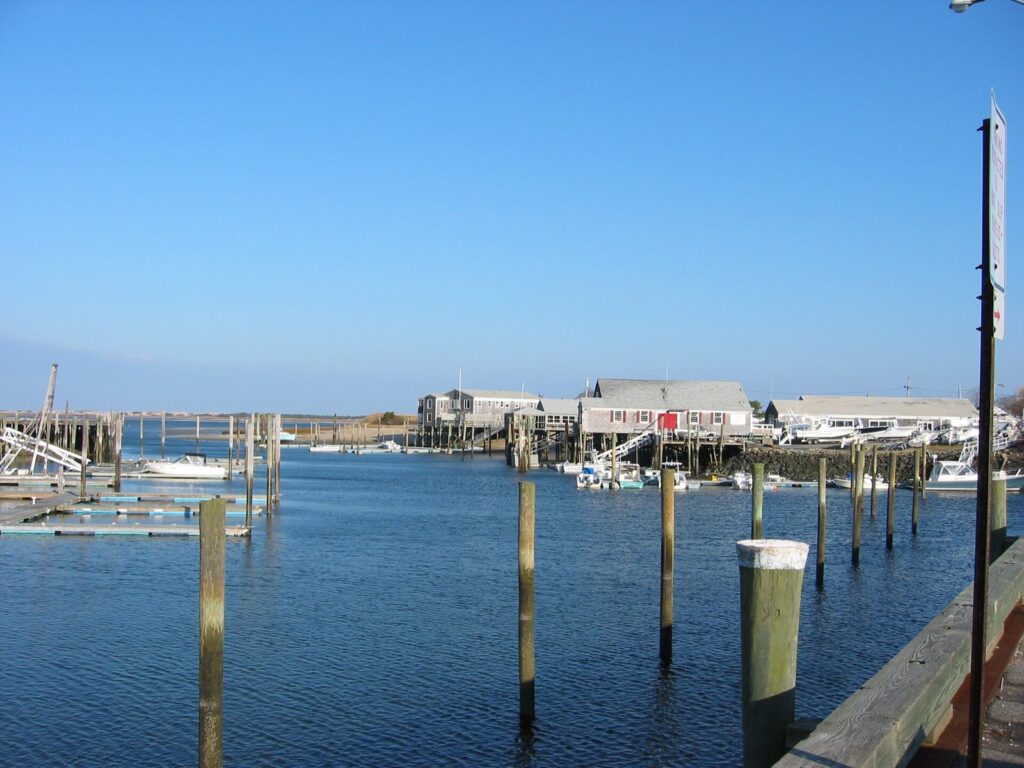
Verdict: stay-based, not boat-based. If you’re in Provincetown, Truro or Wellfleet, board in Provincetown; if you’re on the Upper or Mid-Cape, Barnstable Harbor saves you two to three hours of round-trip driving on a summer day. Either way, ask whether the operator takes part in Whale SENSE, a program from NOAA Fisheries, Whale and Dolphin Conservation and the Stellwagen Bank sanctuary that recognizes companies committed to responsible whale watching.
How do you book, and how far ahead?
For a July or August weekend, or for a sunset trip, book online as soon as your dates are set, because those have the fewest seats for the most demand. For spring and fall trips, a day or two ahead is usually enough, and waiting lets you pick a calm day from the marine forecast. When you book, check the cancellation and rain-check policy and ask about child and senior fares, then plan to arrive early enough to park and check in without a sprint down the pier.
What happens on a whale watch, and how do you prepare?
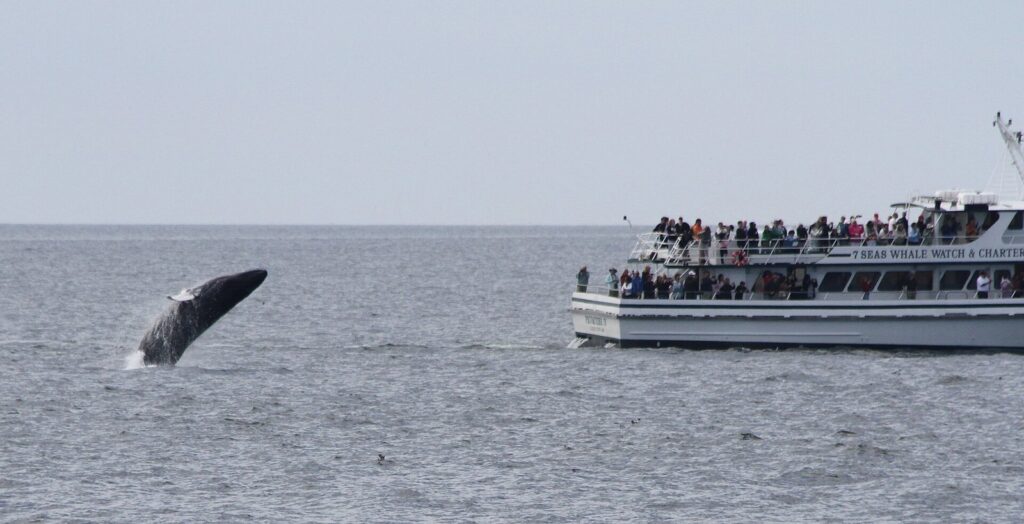
A whale watch is a long boat ride with a big payoff in the middle. The ride out to the feeding grounds takes a good part of the trip, a naturalist narrates once whales are spotted, and the boat slows and holds its distance while the whales do whatever they’re doing. Some days that’s a breach every few minutes; some days it’s a fin and a blow at a distance. Nobody can promise which.
- Dress for March, even in July. It’s noticeably colder and windier on the water than in town. Bring a warm layer, a windbreaker and a hat that won’t blow away.
- Plan for seasickness before you feel it. If you’re prone to it, take motion-sickness medicine before you board, eat something light, sit low and near the middle of the boat, and keep your eyes on the horizon.
- Bring sunglasses, sunscreen and binoculars. Glare off the water is fierce, and binoculars turn a distant blow into a whale.
- Check in early and check the weather. Operators cancel or reschedule when seas are too rough, and a canceled trip is better than a miserable one. Ask about the policy if no whales are seen.
- Choose your spot on the boat. The upper deck has the widest view and the most motion; the lower deck near the middle is the steadiest. The bow often sees whales first, but it takes the spray.
- Keep everything on board. The sanctuary asks passengers not to throw litter overboard, because animals swallow it.
Which whales might you see?
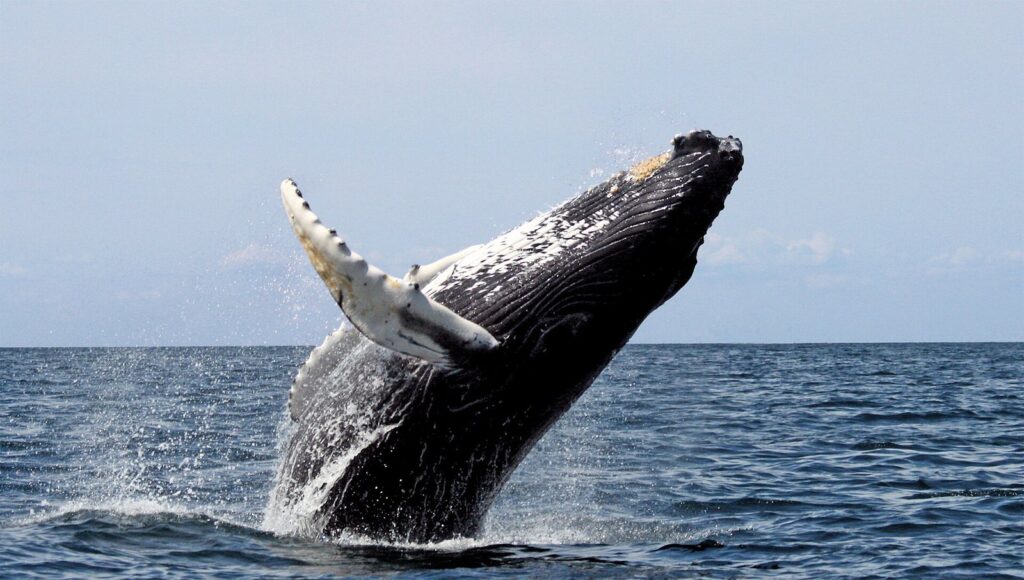
Humpbacks are the headliners: reliable, curious and given to breaching, flipper-slapping and lunge-feeding at the surface. They’re the species the sanctuary itself singles out. Other whales turn up too, and a good naturalist will point out the differences.
| Species | How to tell | When | Notes |
|---|---|---|---|
| Humpback whale | Long white flippers, a bushy blow, flukes raised on a dive, up to about 50 feet | April to October and later | Each tail’s black-and-white pattern identifies the individual |
| Fin whale | Very long and fast, with a tall column of a blow; up to about 70 feet | Summer and fall | The second-largest animal on Earth |
| Minke whale | Small and quick, about 25 to 30 feet, rarely lingers at the surface | Summer and fall | Easy to miss; watch for a pointed head |
| North Atlantic right whale | No dorsal fin, a V-shaped blow, pale patches on the head | Late winter and spring in Cape Cod Bay | Critically endangered; boats must stay 500 yards away |
Why do the whales come here?
Stellwagen Bank is an underwater plateau at the mouth of Massachusetts Bay, between Cape Ann and the tip of Cape Cod. Currents running up over the bank lift nutrients toward the surface, feeding plankton and the schools of small fish that humpbacks and other whales come to eat. That’s why the whales here are busy feeding rather than passing through, and why summer trips so often find them.
Dolphins, seabirds and the occasional ocean sunfish often add to a good day, and on the ride home the gulls and terns around the fishing boats are worth a look too.
Can you see right whales from shore?
Sometimes, and it’s one of the Cape’s great off-season sights. North Atlantic right whales, among the most endangered whales in the world, come into Cape Cod Bay in late winter and spring to feed. They often feed close to shore, and from the beach you can sometimes see them skimming the surface with their mouths open, straining clouds of zooplankton. In the 2025/2026 season, 57 were sighted in the bay in February 2026 and 83 in March, the busiest month, before numbers fell to 40 in April.
Watching from shore is the way to do it. It is illegal to approach within 500 yards of a right whale by air or water without a federal research permit, and that includes kayaks, paddleboards, fishing boats and drones. Bring binoculars, pick a bay-facing beach on a calm day, and look for dark backs and V-shaped blows. The free Whale Alert app shares right whale sightings.
The reason for all the caution is simple arithmetic: only a few hundred North Atlantic right whales are left, and collisions with boats and entanglement in fishing gear are the biggest threats they face. Every whale that feeds undisturbed in Cape Cod Bay matters to the species.
Where can you see seals on Cape Cod?
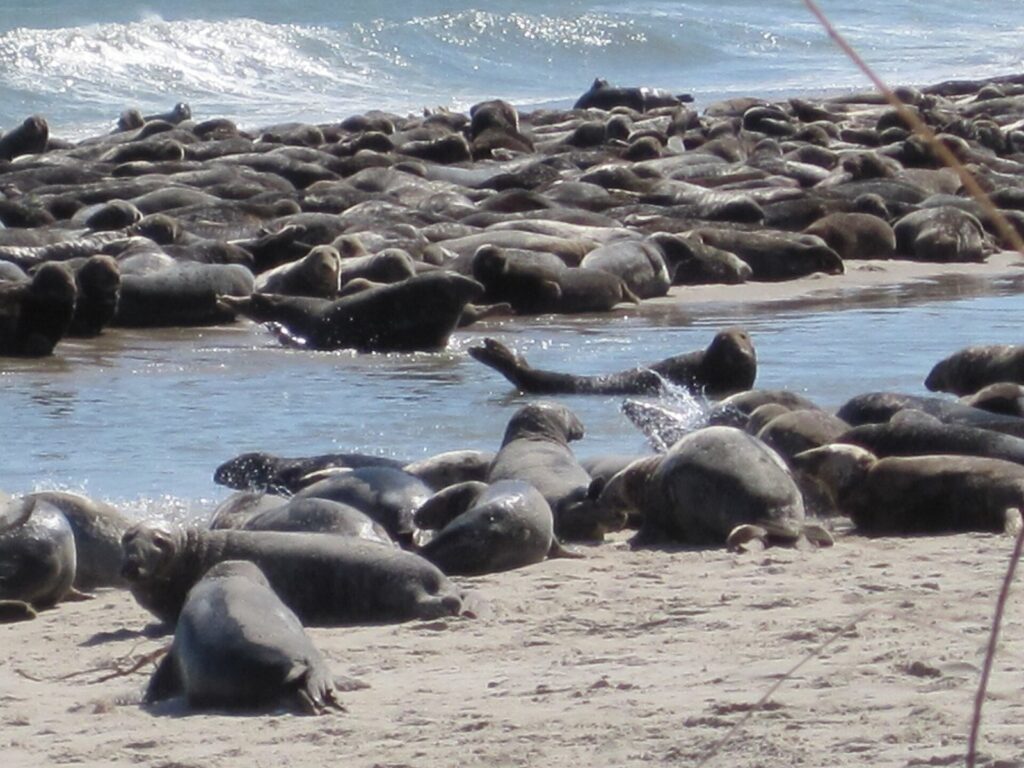
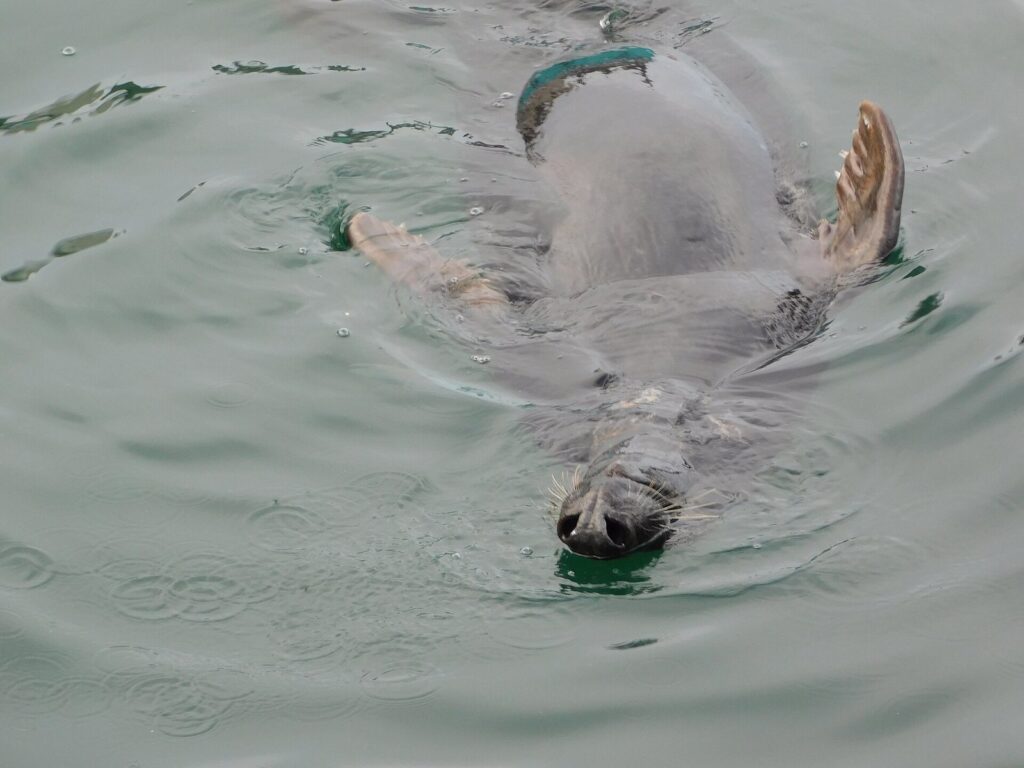
Seals are the Cape’s easiest big wildlife: they’re here all year, and gray seals haul out in huge numbers on the sandbars and beaches around Monomoy National Wildlife Refuge off Chatham. You’ll also see heads bobbing off the Outer Cape’s ocean beaches, and seals often wait around the Chatham Fish Pier when the fishing boats come in.
Seal cruises
A seal cruise is the easy way to see a haul-out up close without disturbing it. In 2026, Monomoy Island Excursions ran naturalist-narrated cruises of roughly 75 to 90 minutes from Harwich Port to the waters off Chatham and Monomoy, several times a day in season, and Beachcomber Boat Tours and the Monomoy Island Ferry ran seal trips from Chatham. The boats keep their distance from the seals; that’s the point, and it’s also why the seals stay put.
| Trip | Leaves from | Length | Best for |
|---|---|---|---|
| Monomoy Island Excursions | Harwich Port | About 75 to 90 minutes | A narrated trip to the big haul-outs |
| Beachcomber Boat Tours | Chatham | Varies | Chatham Harbor and Pleasant Bay |
| Monomoy Island Ferry | Bridge Street, Chatham | Varies | Seal trips and access toward Monomoy |
Gray seal or harbor seal?
Most of the seals you’ll see around Monomoy are gray seals, the big ones: adult males are huge, with a long, straight nose that gives them an almost horse-like profile. Harbor seals are smaller, with a rounder, dog-like face and a short snout. If you’re watching from the beach and can’t tell which is which, it doesn’t matter: the 150-foot rule applies to both.
Seals on the beach
On land, give seals room: the National Seashore asks visitors to stay at least 150 feet from wild animals. A seal resting on the beach is usually doing exactly what it should, so don’t try to push it back into the water, don’t feed it, and keep dogs well away. If one looks entangled, sick or injured, keep your distance and call 866-755-6622 or 508-743-9548.
Where are the best places for birding on Cape Cod?
The Cape sticks out into the Atlantic, so it catches birds on the move, and spring and fall migrations are the best times. Southbound shorebirds start arriving from the Arctic in late July, and most migrants pass through between August and October: least sandpipers, sanderlings, ruddy turnstones, and semipalmated and black-bellied plovers among them. In spring and summer, the nesting season takes over.
| Place | Town | What to look for |
|---|---|---|
| Monomoy National Wildlife Refuge | Chatham | Terns, red knots, American oystercatchers, piping plovers and the largest nesting colony of common terns on the Atlantic seaboard |
| Wellfleet Bay Wildlife Sanctuary | Wellfleet | Salt marsh, woodland and shore birds on about 5 miles of trails |
| Fort Hill and Nauset Marsh | Eastham | Wading birds and shorebirds over the marsh |
| Long Pasture and Sandy Neck | Barnstable | Harbor and marsh birds, with views to the dunes |
| Ashumet Holly Wildlife Sanctuary | East Falmouth | Barn swallows that nest there every year |
| Season | What’s around | Where to go |
|---|---|---|
| April and May | Returning terns, plovers and oystercatchers; spring migrants in the woods | Wellfleet Bay, and the beaches from outside the closures |
| June and July | Nesting terns and plovers, and young birds on the sand | From outside posted areas, or Monomoy from a boat |
| Late July to October | Southbound shorebirds from the Arctic | Monomoy’s flats, Wellfleet Bay, Fort Hill and Nauset Marsh |
| November to March | Sea ducks offshore and seals on the sandbars | Ocean-facing beaches and harbor mouths on calm days |
Time your visit to the tide. Shorebirds spread out across the flats to feed at low tide, and a rising tide pushes them closer to shore and onto their high-tide roosts, which is when you’ll get the best looks. A tide table and a pair of binoculars matter more than any other gear, and a scope helps on the big flats.
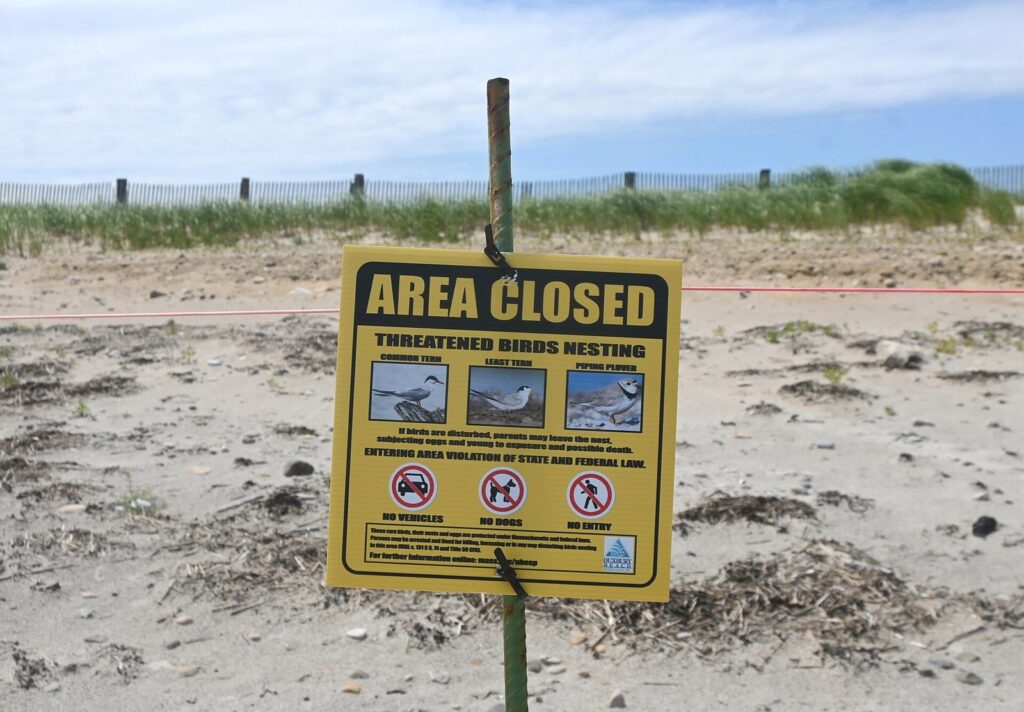
Monomoy’s common tern colony topped 17,000 pairs in 2022, which gives you a sense of the scale. Nesting birds are also why beaches and trails close in sections from spring into summer: piping plovers and terns lay eggs on open sand, and a single dog or a careless walker can end a nest. On the National Seashore, dogs are banned from posted nesting areas from March to October. Our guide to Cape Cod’s parks and nature areas covers the refuges and sanctuaries in more detail.
What should you know about sharks?
White sharks come to Cape Cod for the seals. They arrive in late spring, build through July and are most numerous from about August through October, and the National Seashore warns that they hunt seals in water as shallow as three feet. That’s a reason for sense, not panic.
- A purple flag at a Seashore beach means a shark has been sighted.
- Stay away from seals and from schools of fish, and don’t swim near either.
- Check Sharktivity, a free app from the Atlantic White Shark Conservancy; its icon turns purple for an hour after a tagged shark is detected.
- Swim near lifeguards and stay closer to shore on the ocean beaches.
If shark worry is spoiling the idea of a swim, the warmer, calmer beaches on Nantucket Sound and Cape Cod Bay are a different world from the open Atlantic; our guide to Cape Cod’s beaches sorts them by coast.
What should you do if you find a sea turtle on the beach?
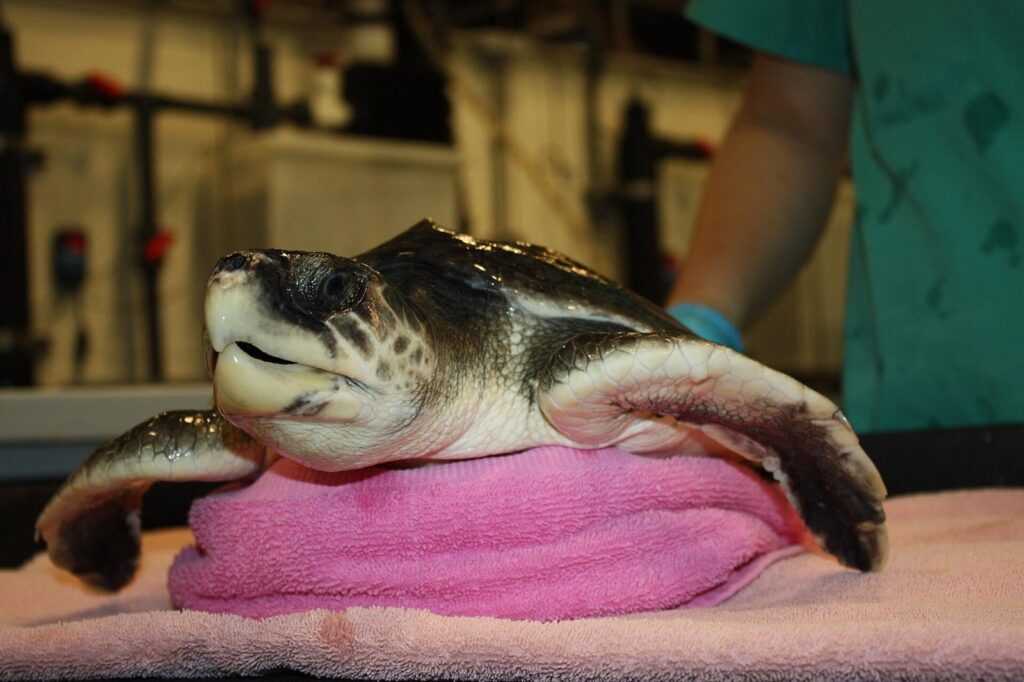
Every fall, young sea turtles migrating south get trapped by the hook of Cape Cod. As the water cools, they become cold-stunned, a kind of hypothermia that leaves them unable to swim, and the wind and tide carry them onto the Cape Cod Bay beaches in November and December. By mid-December 2025, rescuers had recovered 667 of them, 573 of them Kemp’s ridleys, the most endangered sea turtle in the world.
If you find one, don’t put it back in the water, even if it seems alive. It needs warming up slowly, not more cold water. Note where it is and call Mass Audubon’s Wellfleet Bay Wildlife Sanctuary, whose sea turtle hotline number is posted on its website. A late-fall beach walk on the bay side can turn into a rescue, which is one of the better reasons to be on the Cape in November.
Mass Audubon’s staff and volunteers walk the bay beaches through the stranding season, especially after cold, windy nights, and the turtles they find are warmed, treated and later released in warmer water. If you want to help beyond a lucky find, the sanctuary is the place to ask.
What are the rules for watching wildlife on Cape Cod?
Most of these are laws, not suggestions, and they exist because the animals are easy to reach.
| Animal | The rule | Who says so |
|---|---|---|
| North Atlantic right whales | Stay at least 500 yards away, by water or air, including drones | Federal law |
| All whales | Don’t chase or harass them; it’s illegal and fines are serious | Stellwagen Bank National Marine Sanctuary |
| Seals and other wild animals | Stay at least 150 feet away | Cape Cod National Seashore |
| Nesting shorebirds | Stay out of posted areas; no dogs in them from March to October | Cape Cod National Seashore |
| Stranded seals | Keep back and call 866-755-6622 or 508-743-9548 | Cape Cod National Seashore |
| Cold-stunned sea turtles | Don’t return them to the water; report them | Mass Audubon |
A few habits cover the rest: never feed wildlife, keep dogs leashed and away from seals and birds, use binoculars or a long lens instead of your feet, and if an animal changes what it’s doing because of you, you’re too close.
Photographing wildlife without disturbing it
Let the lens do the approaching. A long telephoto from the boat rail or the edge of the beach gets you closer than your feet should, and a phone held up to binoculars works better than you’d think. Skip the flash, never bait or call an animal toward you, and keep drones on the ground around wildlife; near a right whale, flying one inside 500 yards breaks federal law. If you post a nesting bird or a stranded animal online, leave out the exact location.
If you’re on your own boat or kayak
The rules don’t shrink with the boat. Chasing or harassing whales is illegal, right whales get a 500-yard buffer by law, and the sanctuary asks boaters to slow down wherever whales are around and to post a lookout. NOAA Fisheries publishes detailed whale-watching guidelines for private boaters, and they’re worth reading before you leave the harbor. From a kayak, seals are the likelier encounter, and the same logic applies: if they start moving toward the water because of you, back off. A seal that flees a haul-out wastes energy it needs, and a group of paddlers can clear a beach in seconds.
How do you plan a wildlife day on Cape Cod?
Provincetown: whales and dunes
Take a morning whale watch from MacMillan Pier, eat lunch in town, then ride or walk the Province Lands in the afternoon. In late June through August, flip it around: beach by day and a sunset whale watch in the evening.
Chatham: seals and shorebirds
Book a seal cruise from Chatham or Harwich Port, walk the Morris Island trails at Monomoy afterward, and finish at the Chatham Fish Pier when the boats come in. In late summer, bring binoculars for the shorebirds on the flats.
Eastham and Wellfleet: marsh birds
Start early at Fort Hill for the marsh, then drive to Wellfleet Bay Wildlife Sanctuary for its trails and nature center. It’s the best birding morning on the Cape for families, and it’s close to the Seashore’s beaches for the afternoon.
Where should you stay for wildlife trips?
Base yourself by the animal you care about most. For whale watches and the Province Lands, Provincetown or Truro puts you minutes from MacMillan Pier. For seals and Monomoy, Chatham and Harwich Port sit closest to the cruises. For a bit of everything, the Mid-Cape around Barnstable and Yarmouth is central, with Barnstable Harbor’s whale watches nearby and Chatham’s seals within easy reach. Our guide to where to stay on Cape Cod and our guide to Cape Cod’s towns help you choose, and our list of things to do on Cape Cod fills the hours between boats.
When the boats don’t go
If rough seas cancel your trip, Wellfleet Bay Wildlife Sanctuary’s nature center, with its exhibits and aquariums, is the best indoor substitute, and a windy day is often a good one for watching seals and seabirds from shore. Rebook the whale watch for the next calm morning rather than forcing a rough one.
Our Cape Cod itineraries fold these into longer trips, and our Cape Cod family vacation guide has tips for whale watches with kids, from seasickness to snacks.
Cape Cod Whale Watching and Wildlife FAQ
When is the best time to go whale watching on Cape Cod?
Most whale watches run from early May to the end of October, when humpbacks are feeding on Stellwagen Bank; humpbacks arrive in April. Summer has the most trips and the calmest seas, while September and October bring fewer passengers. Right whales feed in Cape Cod Bay in late winter and spring, but you watch those from shore.
Where do whale watches leave from on Cape Cod?
Two ports: MacMillan Pier in Provincetown, where Dolphin Fleet runs trips from April to October, and Barnstable Harbor, where Hyannis Whale Watcher Cruises sails. Pick the one closest to where you’re staying; Provincetown also works as a car-free day trip by fast ferry from Boston.
How long is a Cape Cod whale watch?
Usually 3 to 4 hours. Dolphin Fleet’s standard trips from Provincetown run 3 to 4 hours, with all-day trips of about 8 hours on select dates, and Hyannis Whale Watcher’s trips from Barnstable Harbor run 3.5 to 4 hours. Much of the time is the ride out to the feeding grounds.
Can you see whales from the beach on Cape Cod?
Sometimes. North Atlantic right whales feed close to shore in Cape Cod Bay in late winter and spring and can be seen from the beach skimming the surface. Bring binoculars and pick a calm day. Never approach them on the water: the legal minimum distance is 500 yards.
Where can you see seals on Cape Cod?
Monomoy National Wildlife Refuge off Chatham has the biggest haul-outs, and seal cruises from Chatham and Harwich Port get you close without disturbing them. Seals also turn up off the Outer Cape’s ocean beaches and around the Chatham Fish Pier. On land, stay at least 150 feet away.
What should you do if you find a stranded seal or sea turtle?
For a seal that looks entangled, sick or injured, keep your distance and call 866-755-6622 or 508-743-9548. For a cold-stunned sea turtle in November or December, don’t put it back in the water; note the location and call Mass Audubon’s Wellfleet Bay sanctuary hotline.
Do you need to book a whale watch in advance?
For summer weekends and sunset trips, yes: book online as soon as your dates are set. In spring and fall you can usually book a day or two ahead and pick a calm day from the forecast. Either way, check the operator’s cancellation and rain-check policy when you book.
Is Cape Cod whale watching worth it?
For most people, yes. Humpbacks feed reliably on Stellwagen Bank from May to October, and a good trip is one of the best wildlife experiences on the East Coast. It takes half a day and a strong stomach helps, so pick a calm day, deal with seasickness before you board and bring warm layers.
Is a whale watch good for kids?
For most kids, yes, if you plan for it. Three to four hours is a long time on a boat, so bring snacks, layers and something to do on the ride out, and deal with seasickness before you board. Dolphin Fleet’s harbor-based Science in the Harbor trips in July and August suit younger children.
Related Cape Cod Guides
- Cape Cod Parks and Nature: Monomoy, the Audubon sanctuaries and the rules on each
- Cape Cod National Seashore: beaches, trails and safety in the Cape’s biggest park
- Cape Cod Family Vacations: whale watches, seal cruises and nature centers with kids
- Best Time to Visit Cape Cod: the months compared, from whale season to off-season
- Getting to and Around Cape Cod: ferries to Provincetown and getting to the harbors
- Cape Cod Itineraries and Day Trips: day plans with whales, seals and birds
Sources and verification
Seasons, schedules, rules and wildlife figures were checked on September 23, 2026 against the agencies, organizations and operators listed below. This guide is compiled from those sources and does not claim first-hand visits.
- NOAA Stellwagen Bank National Marine Sanctuary: whale watching
- Massachusetts Division of Marine Fisheries: right whales in coastal Massachusetts, 2025/2026 season
- National Park Service: Cape Cod National Seashore
- National Park Service: 2026 Cape Cod National Seashore visitor guide (PDF)
- U.S. Fish and Wildlife Service: Monomoy National Wildlife Refuge
- Mass Audubon: protecting sea turtles on Cape Cod
- Mass Audubon: the 2025 sea turtle rescue season
- Mass Audubon: southbound shorebirds on the Cape
- Atlantic White Shark Conservancy: Sharktivity
- Dolphin Fleet Whale Watch
- Hyannis Whale Watcher Cruises
- Monomoy Island Excursions
- Bay State Cruise Company
Cape Cod Tourism Guide is an independent publication, not affiliated with the Cape Cod Chamber of Commerce, the National Park Service or any business named here.
Photo credits
- Humpback whale, Stellwagen Bank: photo by Whit Welles Wwelles14, Wikimedia Commons (CC BY 3.0)
- Barnstable Harbor: photo by Wjones59 (talk) (Uploads), Wikimedia Commons (CC BY 2.5)
- Whale watch on Stellwagen Bank: photo by Phil8684, Wikimedia Commons (CC BY 4.0)
- Gray seals at Monomoy: photo by Department of the Interior. U.S. Fish and Wildlife Service. National Conservation Training Center. 10/1997-8888, Wikimedia Commons (public domain)
- Seal in Chatham harbor: photo by AK-Bino, Wikimedia Commons (CC BY-SA 4.0)
- Nesting area closure sign: photo by Niranjan Arminius, Wikimedia Commons (CC BY-SA 4.0)
- Kemp's ridley sea turtle in rehabilitation: photo by U. S. Fish and Wildlife Service – Northeast Region, Wikimedia Commons (public domain)